The Vignelli Canon – A Design Education in One Book
How does one begin to describe the importance or the brilliance of the Vignelli Canon? Maybe by first establishing that it is the best instructional book about graphic design ever conceived — a perfectly reasoned and articulated manifesto on Modernist thinking.
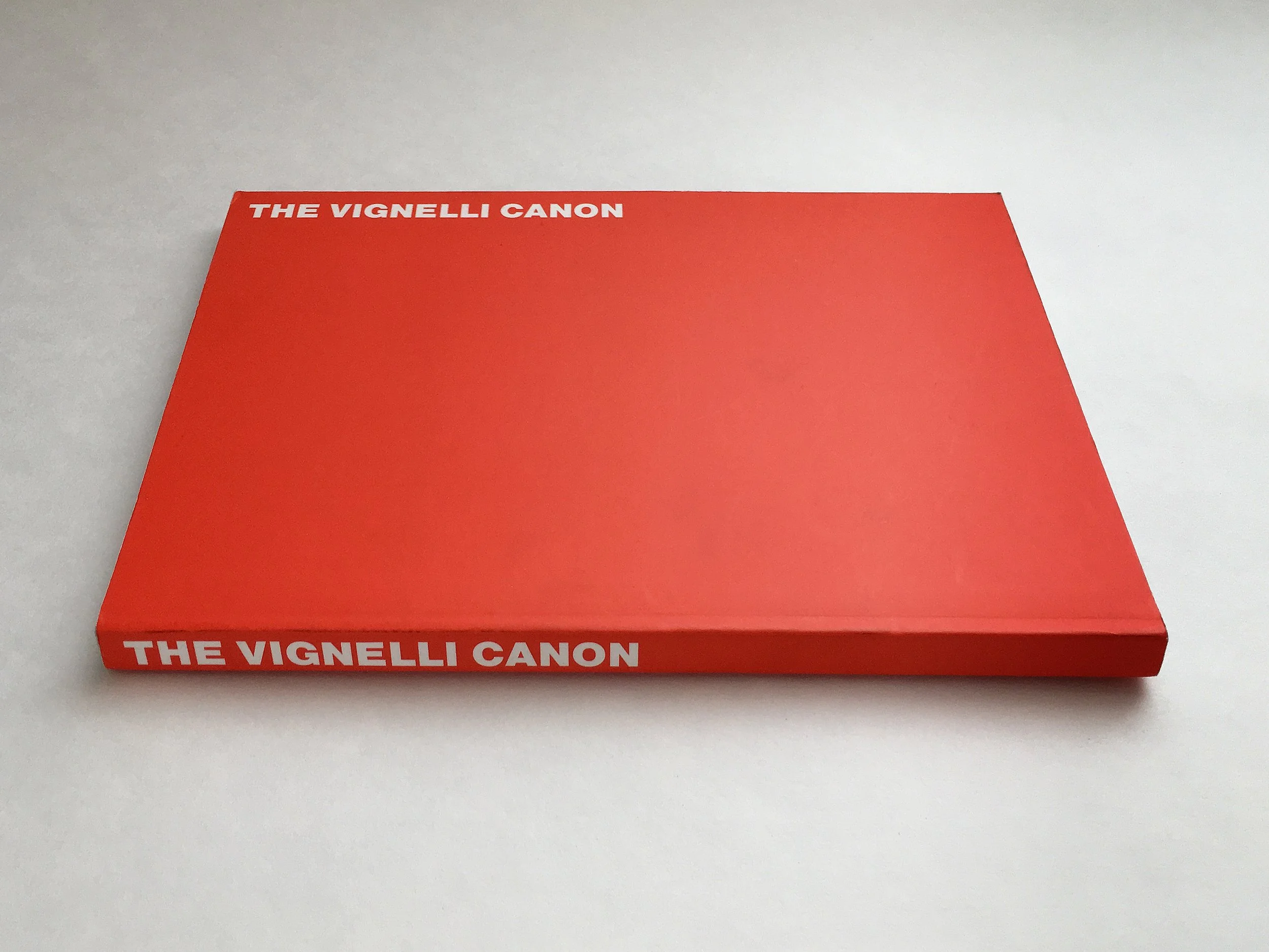
I owned this book for months and had read through it multiple times before one day realizing that the cover design and the spine design are exactly the same — the same typeface, the same size, the same colors and the same alignment. This unified book jacket design underscores the thesis statement of the book itself: distilling information into its simplest form results in the most powerful communication. And one more reason why any object you own that was designed by Massimo Vignelli is usually the most beautiful thing in the room.
A free PDF version of the book can be downloaded here.
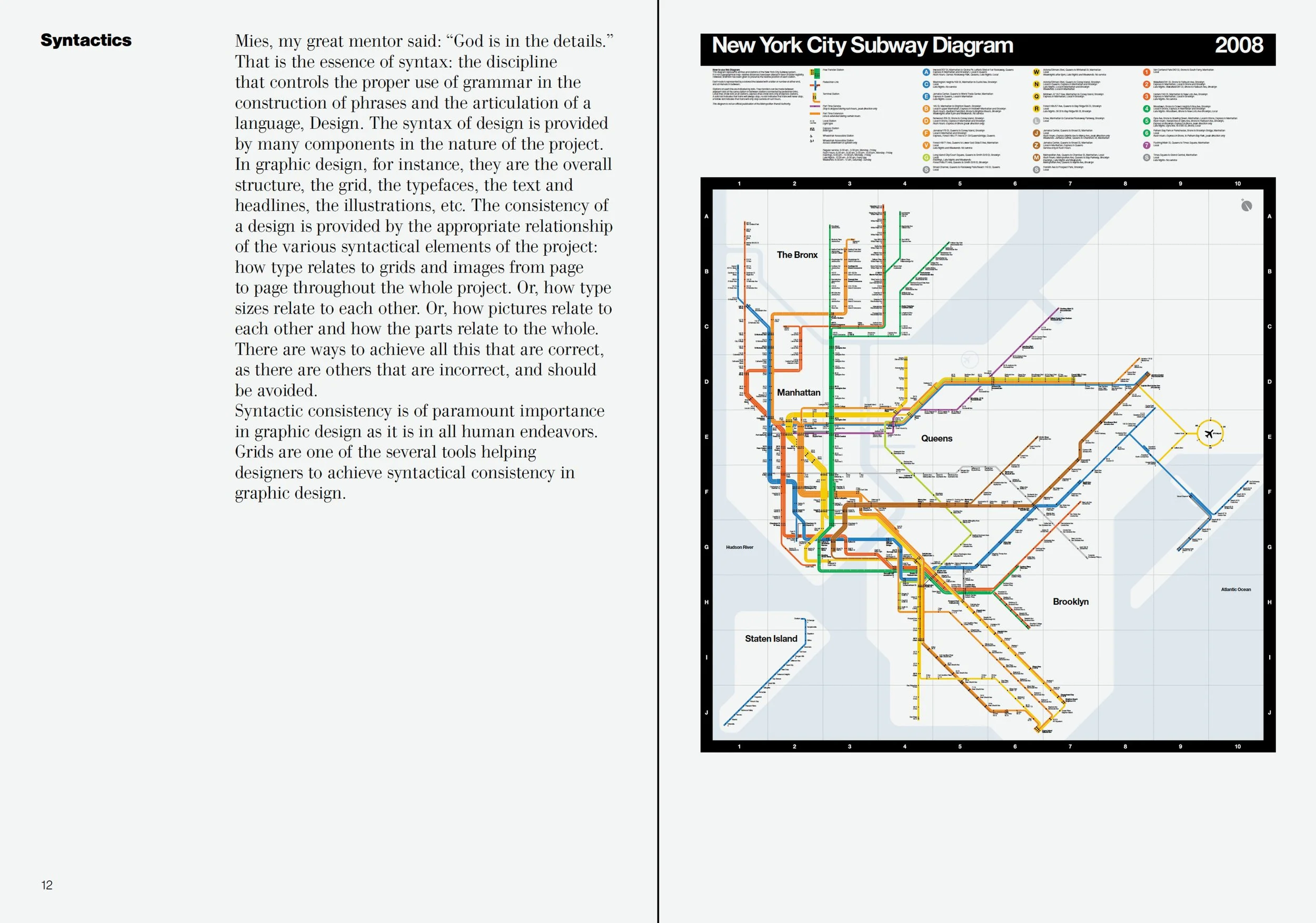
In the early 1970s, Massimo Vignelli’s firm Unimark International redesigned the New York.
Less of a traditional map and more of a diagram, the new design prioritized ease of use and comprehension. Its key design features included straight lines and fixed angles (mostly horizontal, vertical, or 45°), bold colored lines for each subway service, and subway stations indicated as simple black dots.
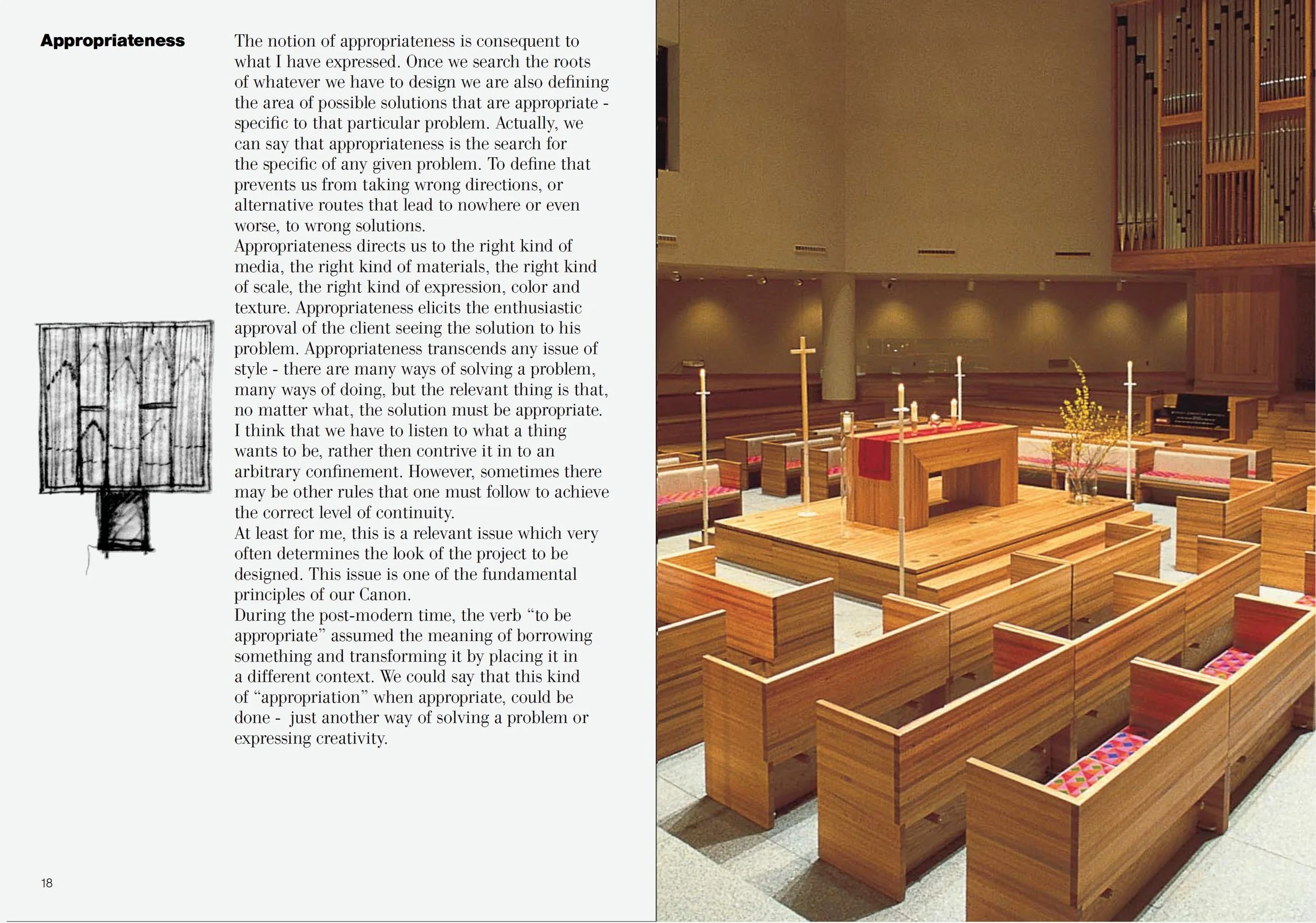
Lella and Massimo Vignelli designed the interior of Saint Peter’s Church in Midtown Manhattan, completed in 1977 at the base of the Citicorp Tower (601 Lexington Avenue). Considered one of their most important and comprehensive projects, they designed everything from the modular pews and gridded organ pipes to liturgical silver, lighting, and graphic identity.
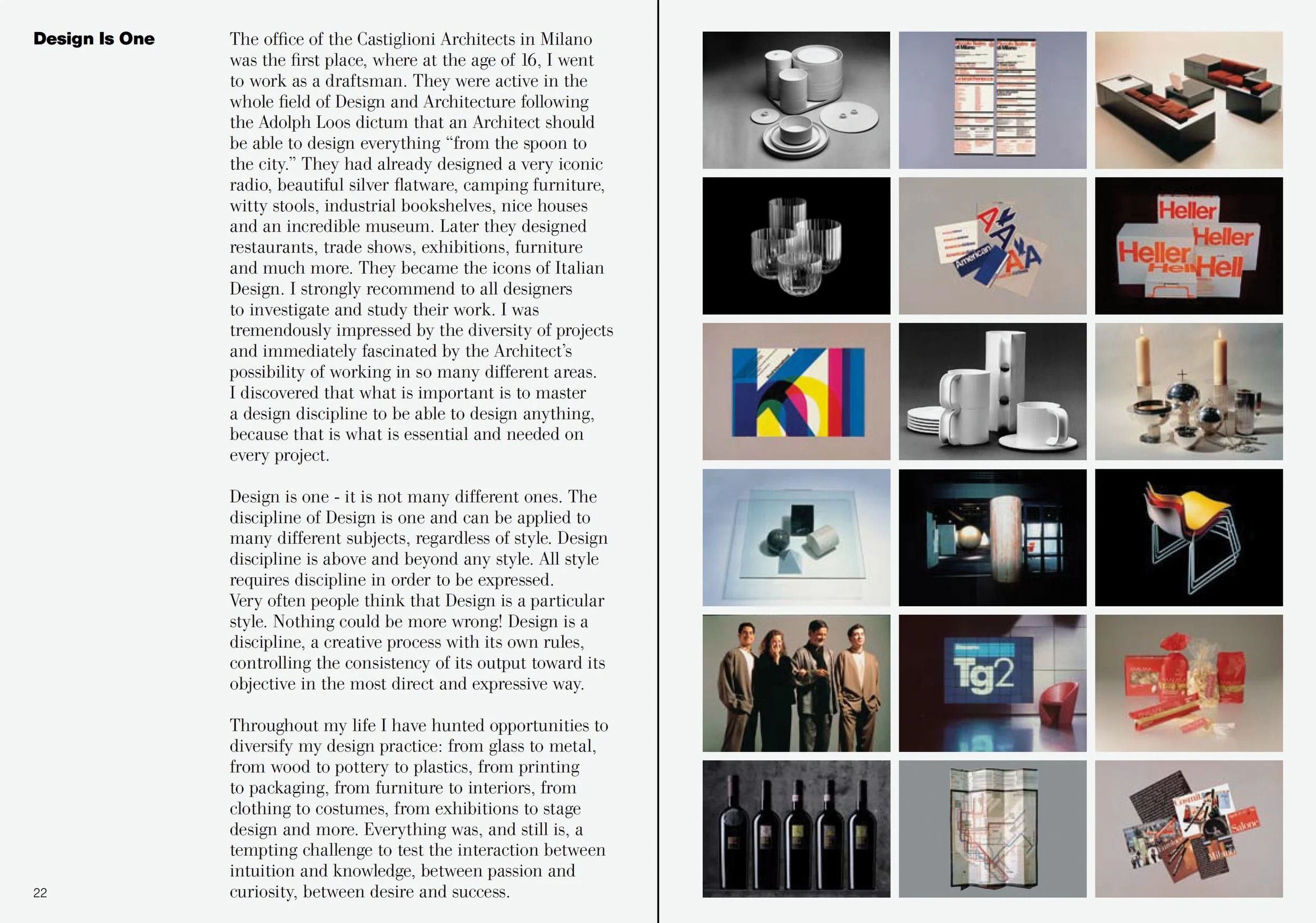
“Design is One” was a philosophy the Vignellis advocated that unified all of their work: the idea that the same core principles could be successfully applied to the design of everything from a logo to a building.
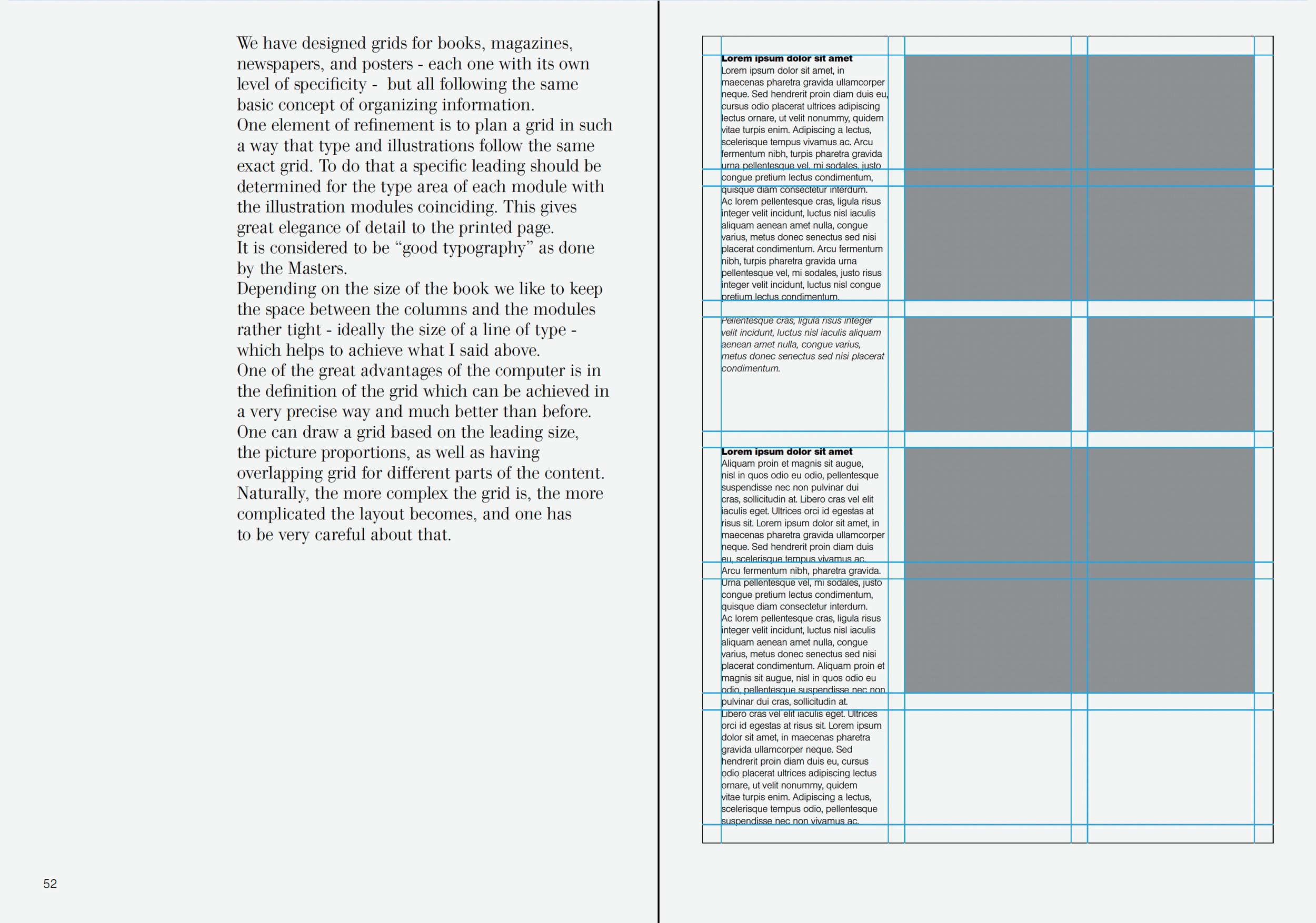
A typographic grid is the invisible framework that organizes the elements of a design, providing structure, order and clarity. Massimo explains the crucial role this plays in making the designer’s job easier and the results stronger.
Back to Index of Journal Stories