Museum of the Moving Image
Comprehensive Visual Identity
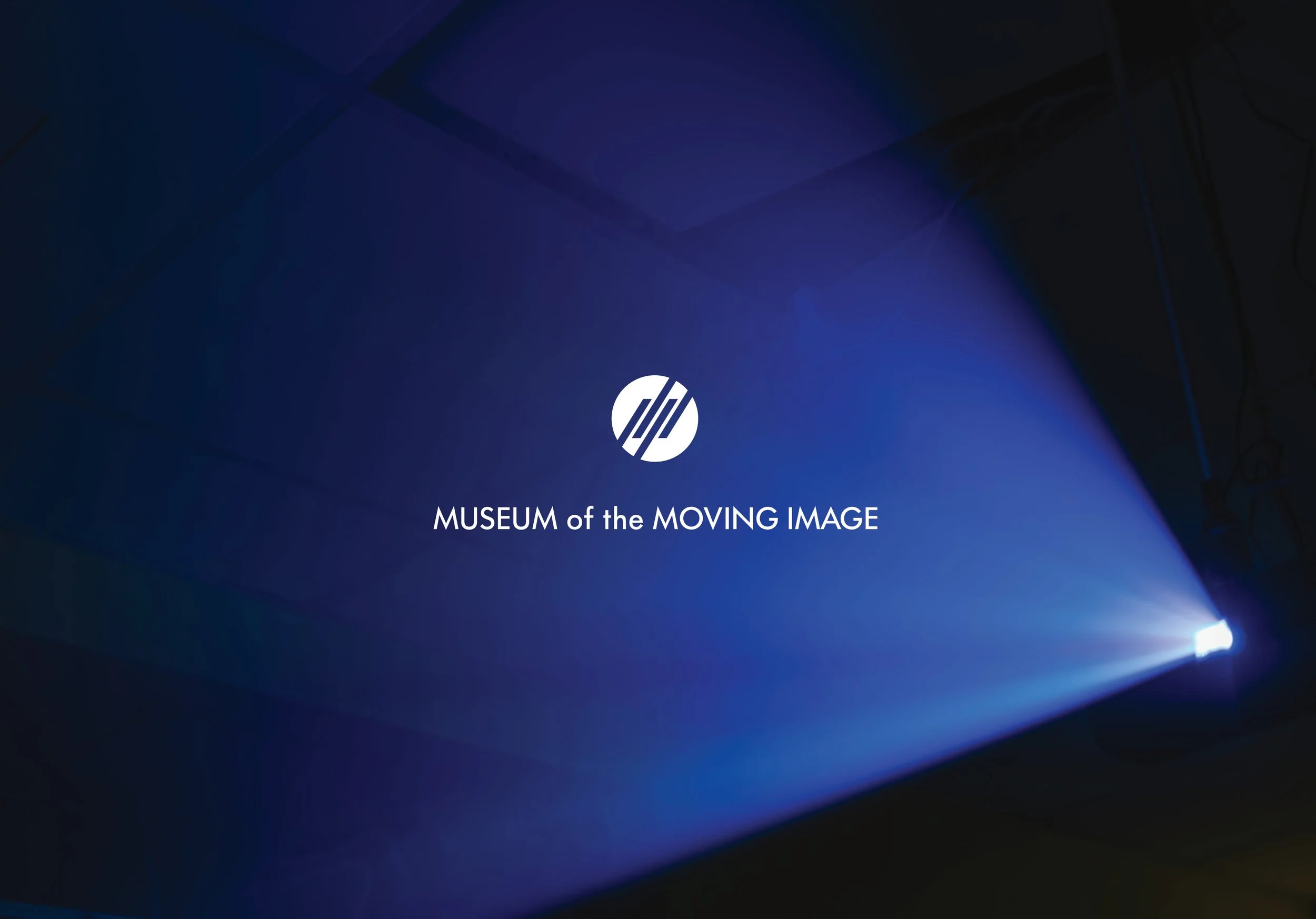
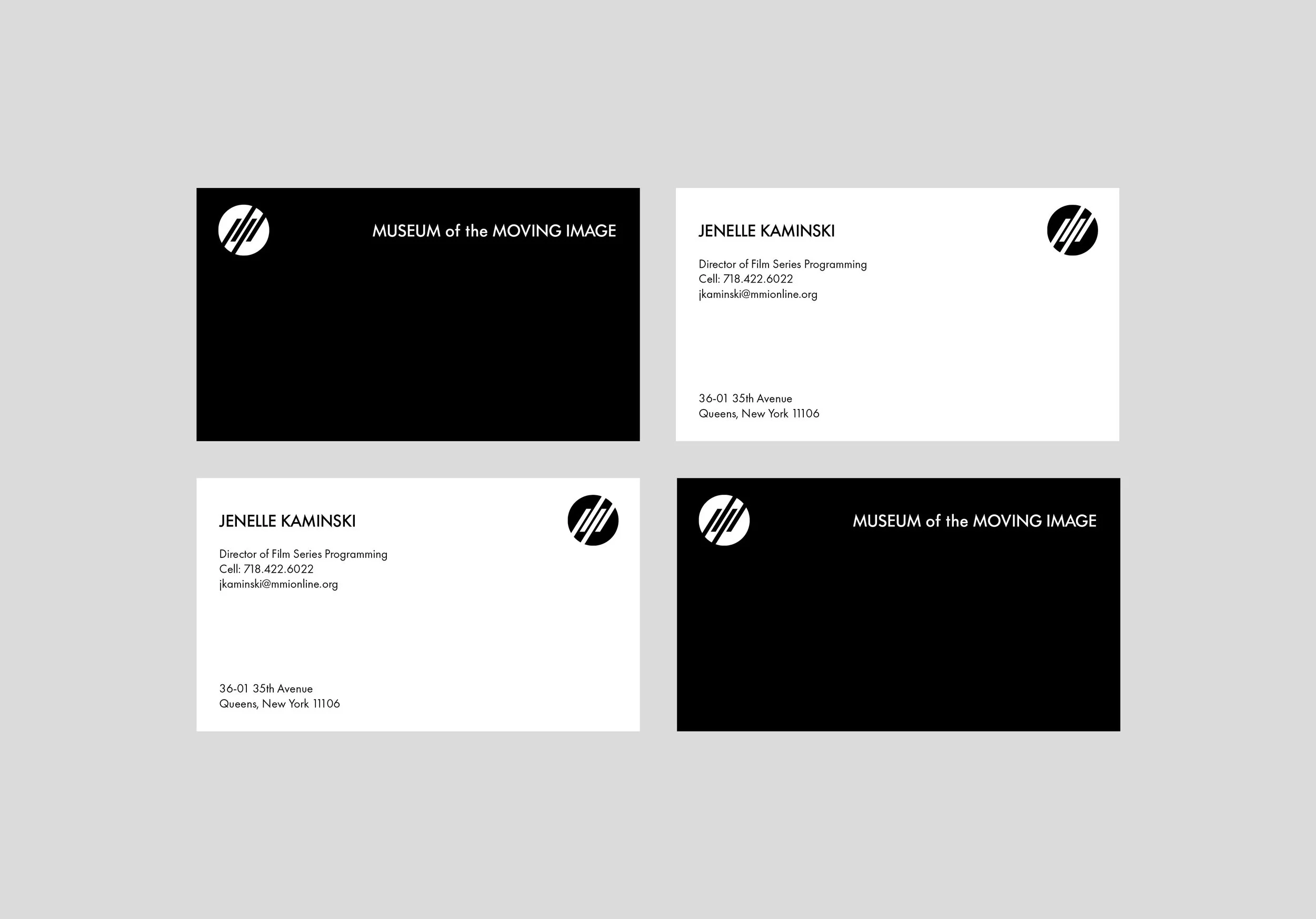
Celebrating the history and achievements of motion pictures, television, and interactive games, the Museum of the Moving Image needed a logo that was not tied to any specific platform or time period. The abstract mark we created conveys the concept of sequential movement without any literal reference to a physical device or technology (movie camera, tv screen, etc.) that could become obsolete in time.
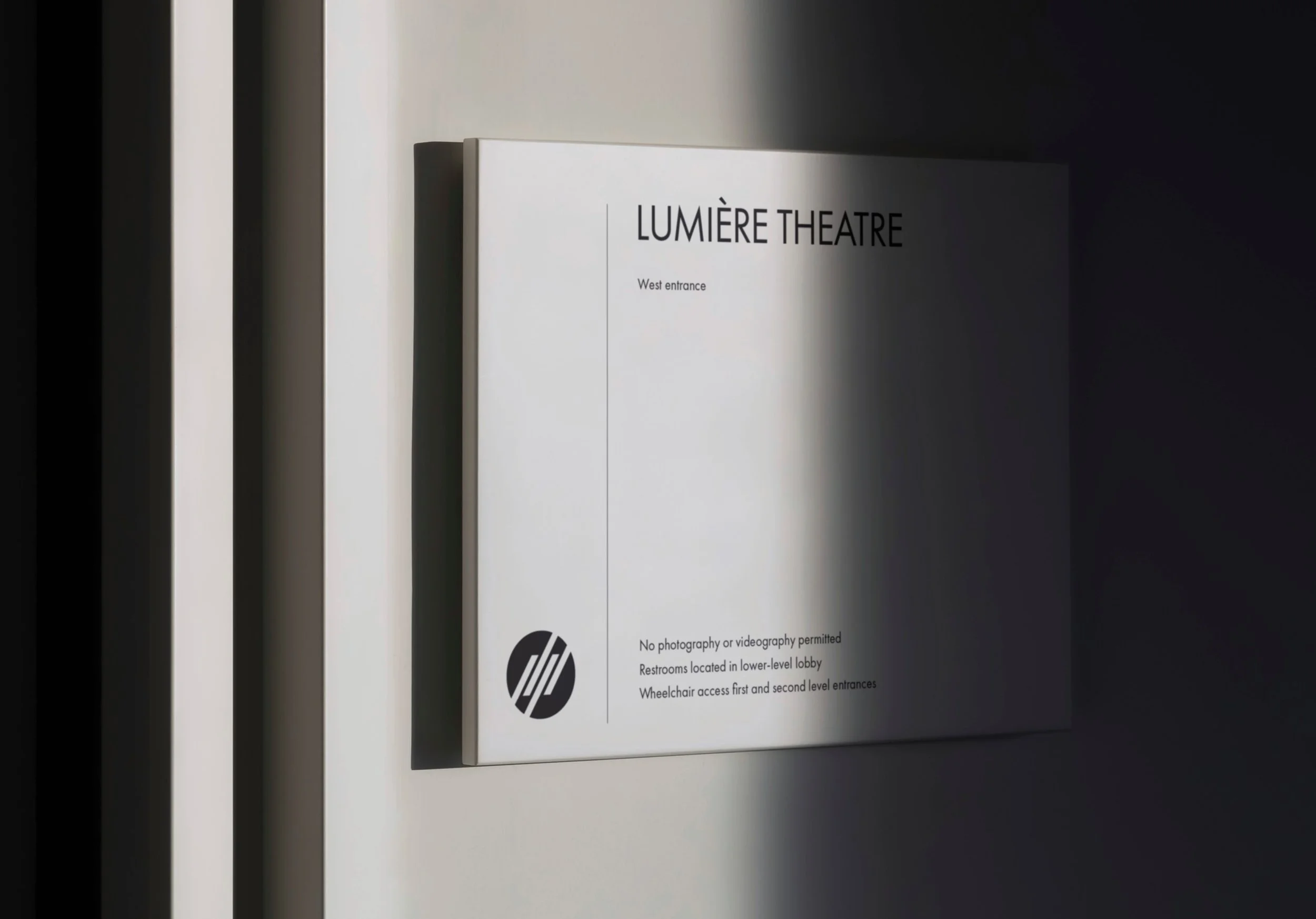
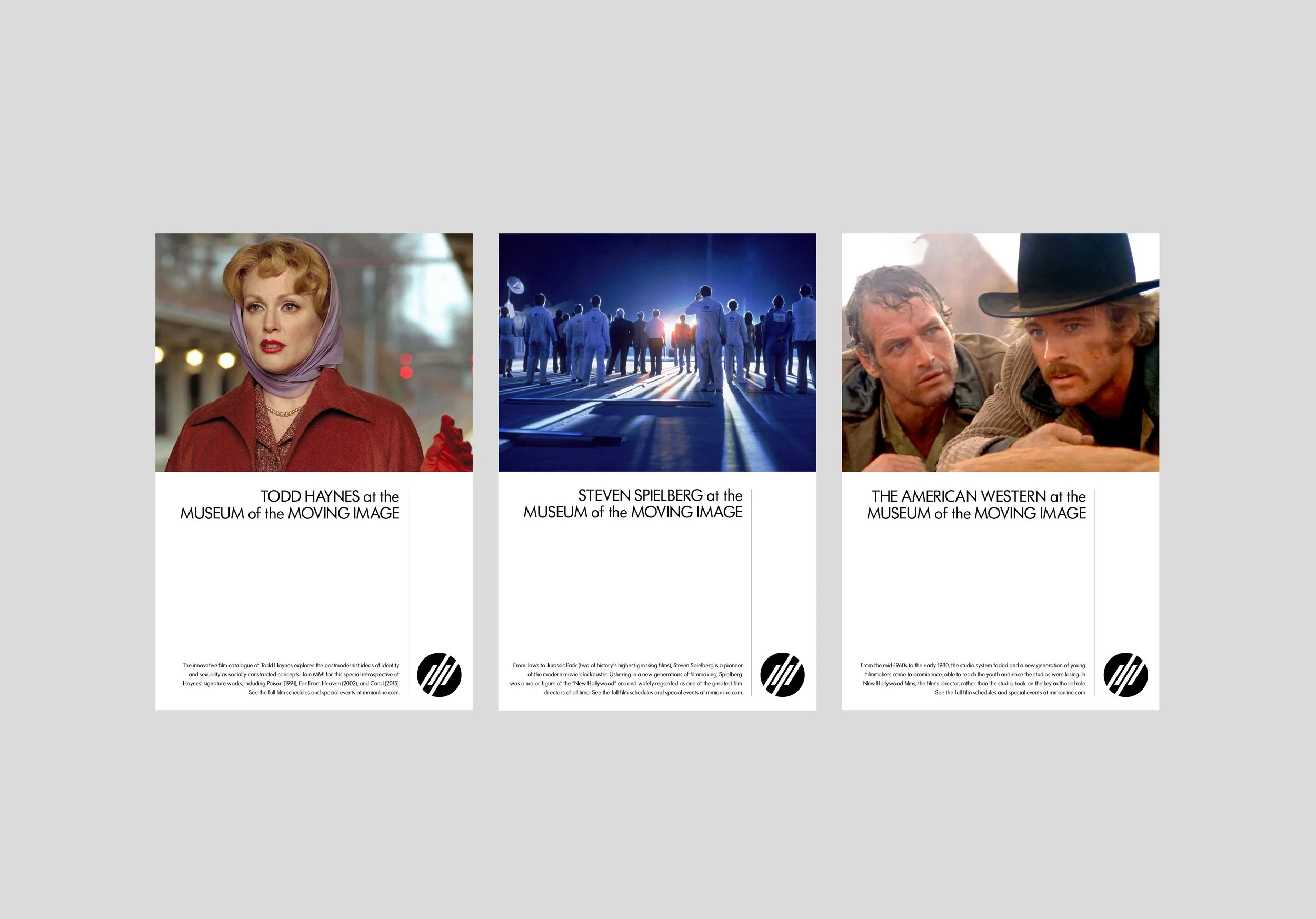
Project scope: Comprehensive branding system including mark, logotype, typography system, signage, and collateral materials / advertising.
Typefaces: Futura by Paul Renner
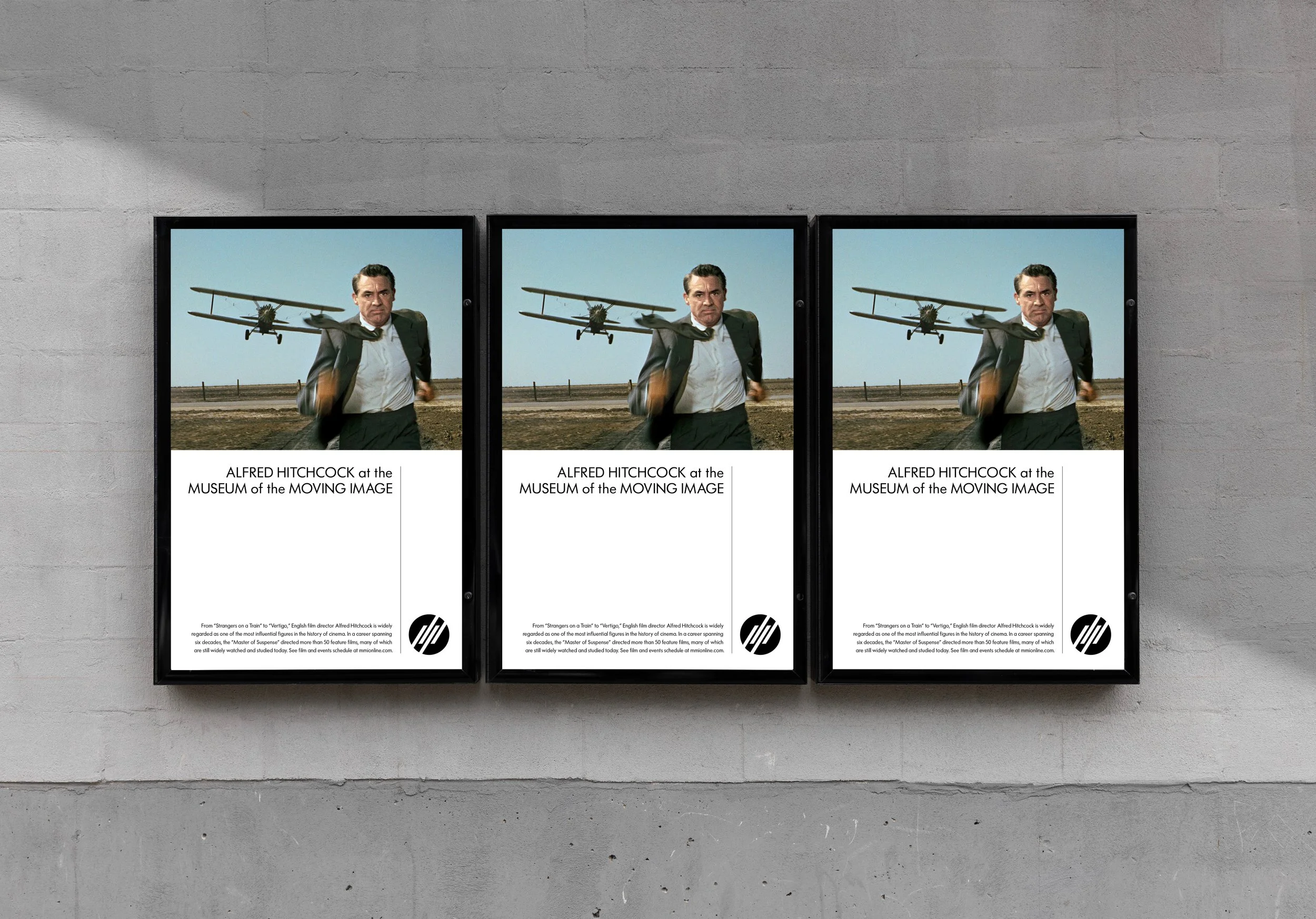
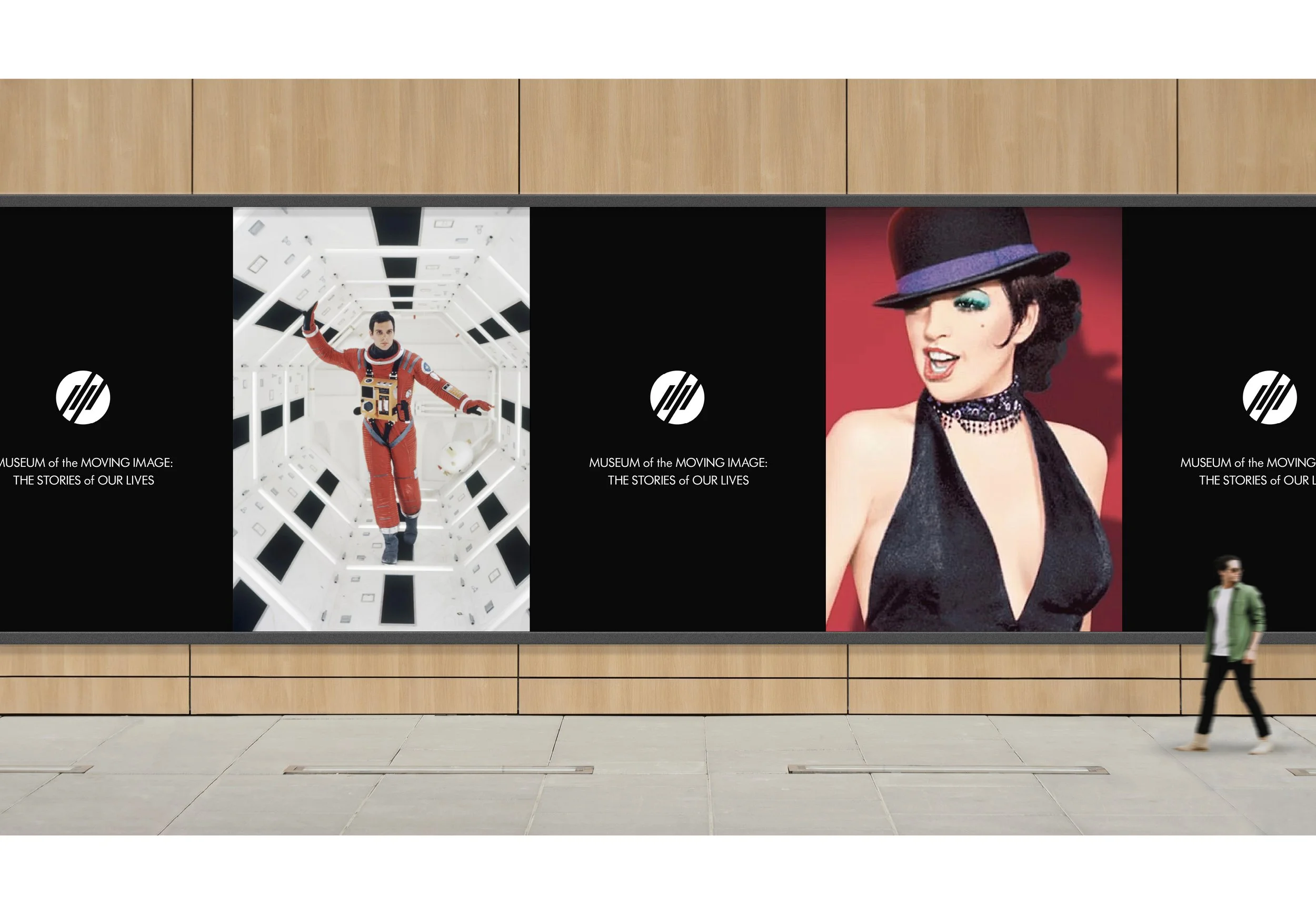
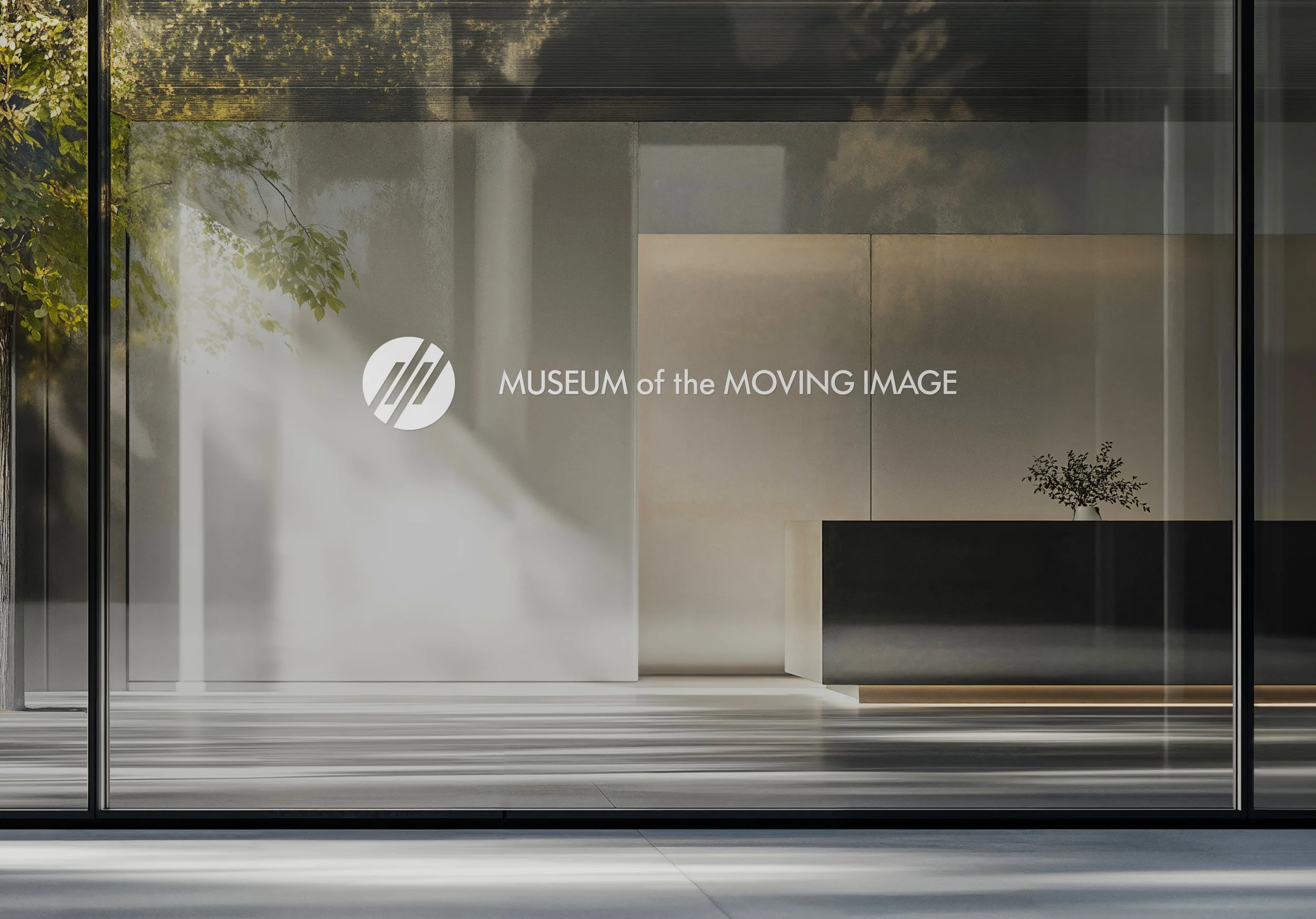
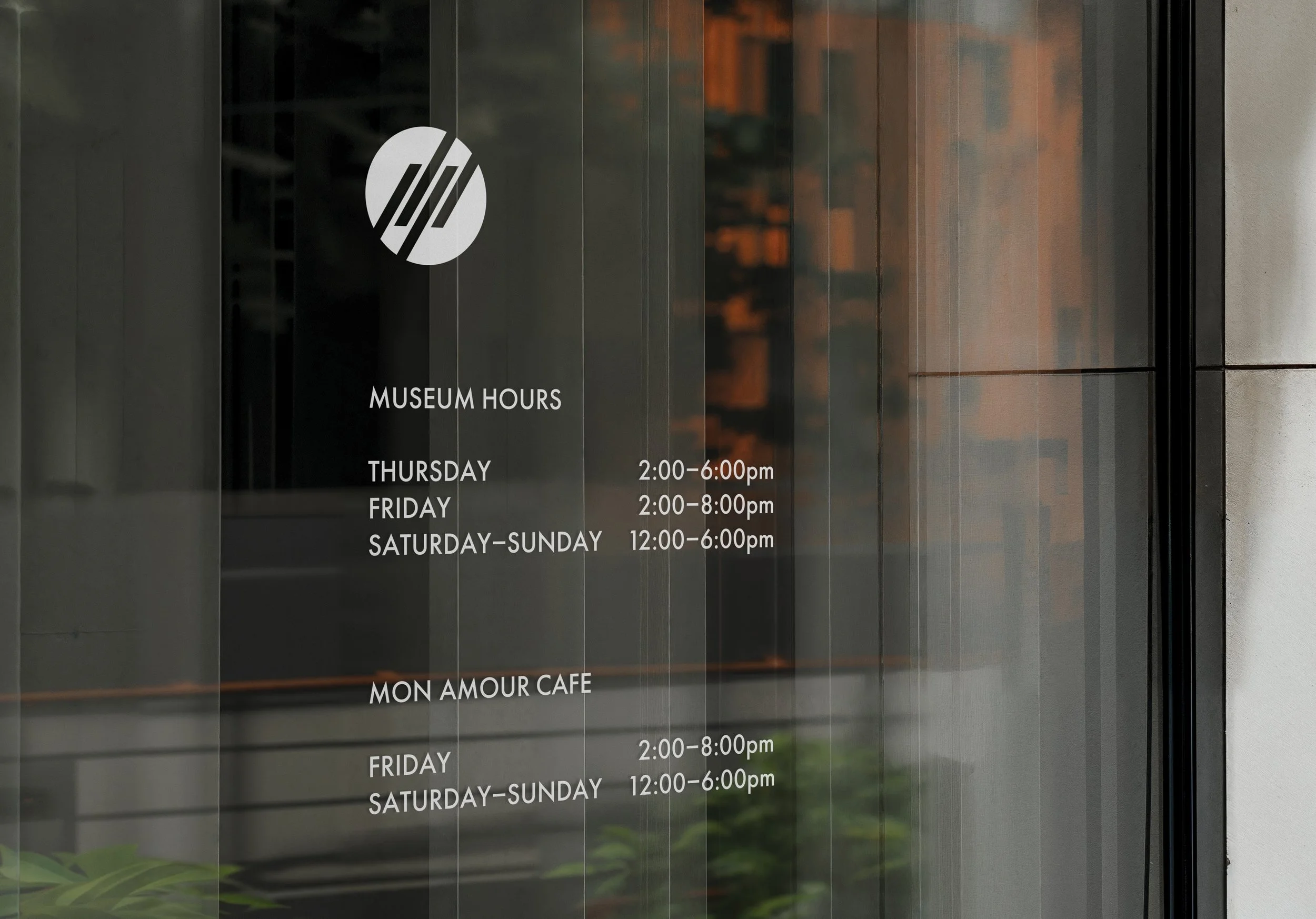
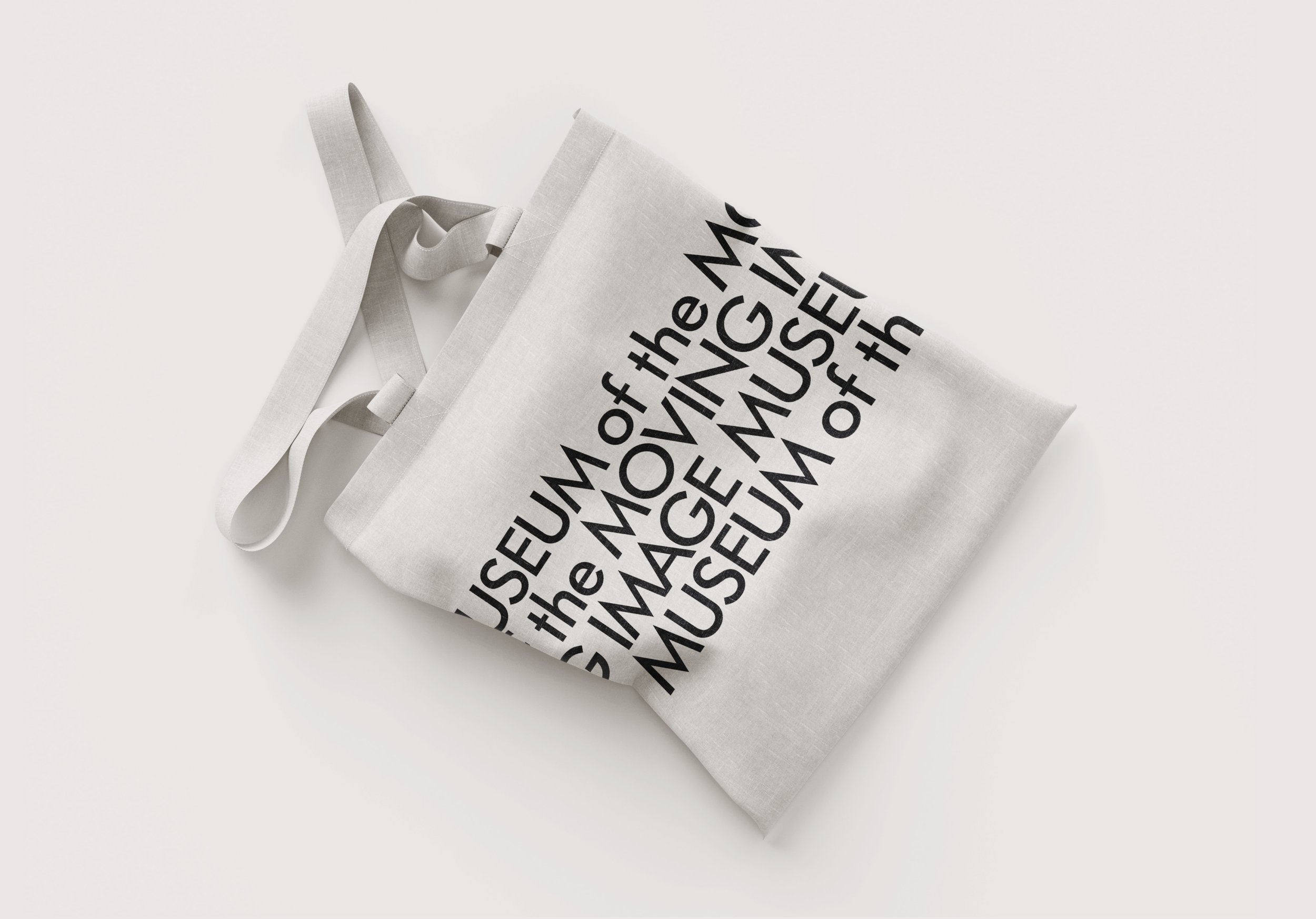
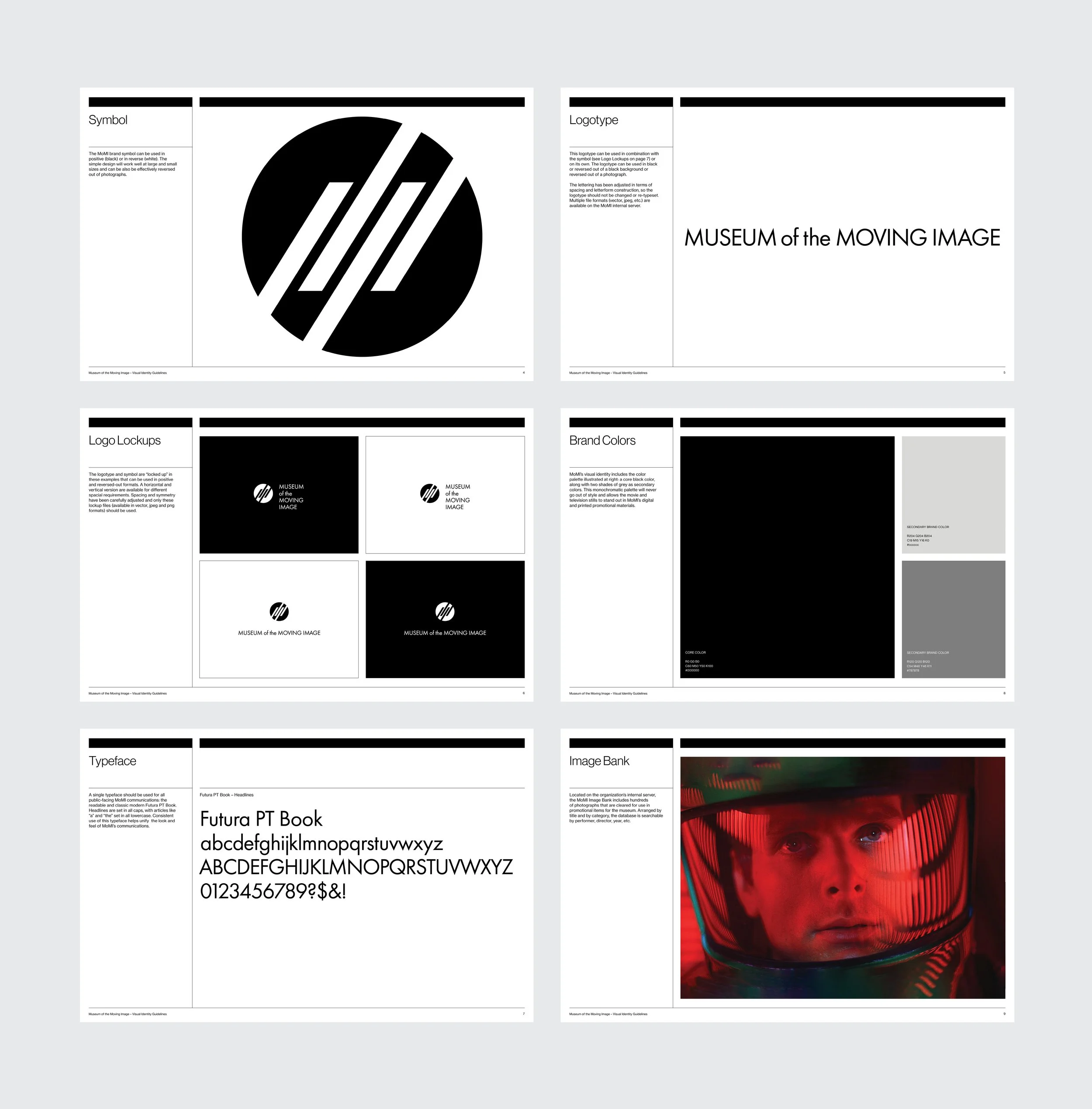
A single weight of the classic typeface Futura is utilized throughout the identity system, emphasizing readability and a clean, timeless design that will never go out of style.
The Visual Identity Guidelines are a multi-page document we developed that explains font usage, symbol and logo lockups, color palettes, and more.
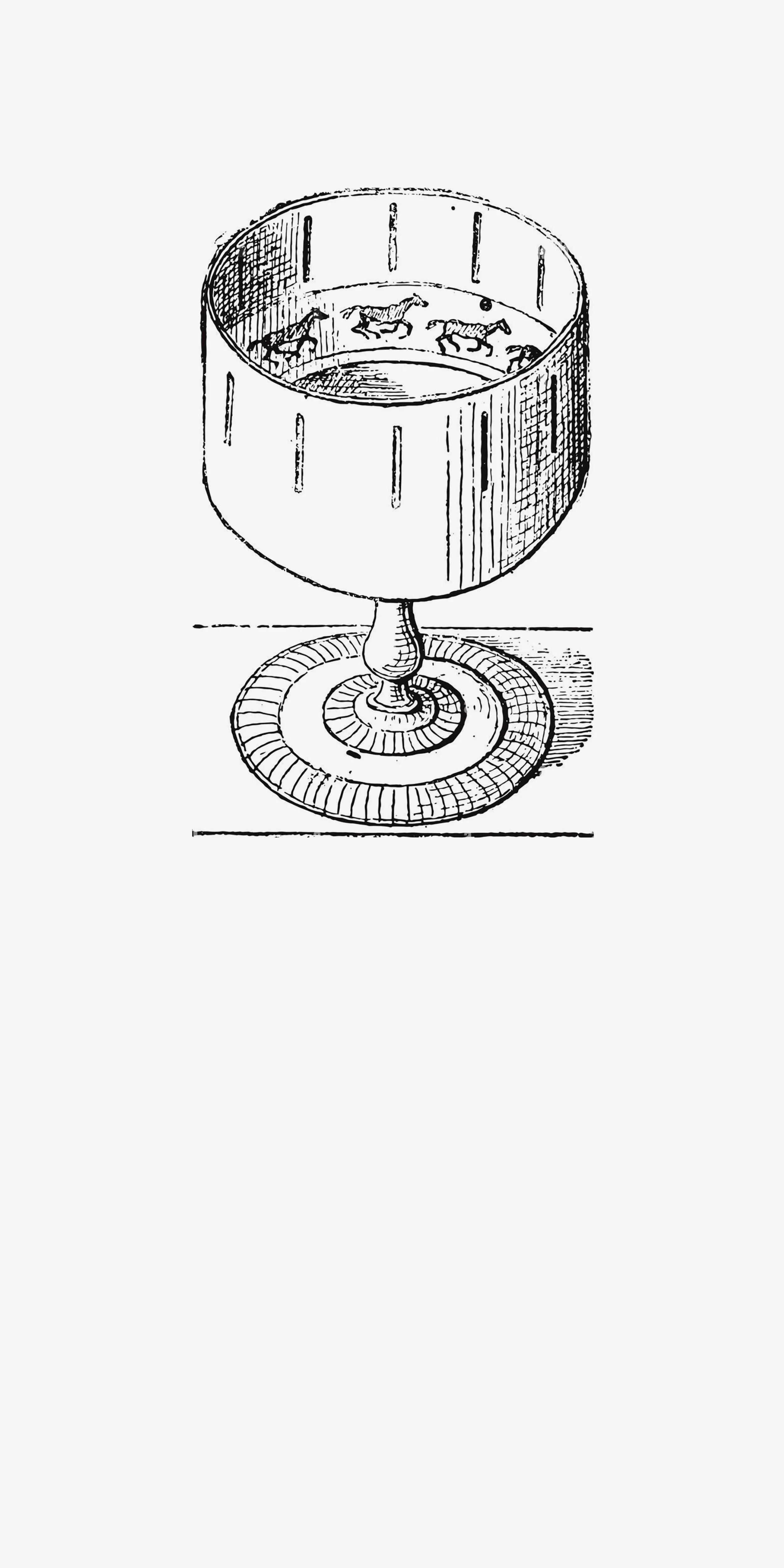
The Inspiration
Developed in the early 1800s, the zoetrope (Greek for “wheel of life”) was a pre-film mechanical device that produced the illusion of motion by displaying a sequence of drawings or photographs showing progressive movements. The viewer sat close to the wheel, chose one vertical slit to look through, and saw the “moving” picture on the opposite side of the wheel’s interior ring.

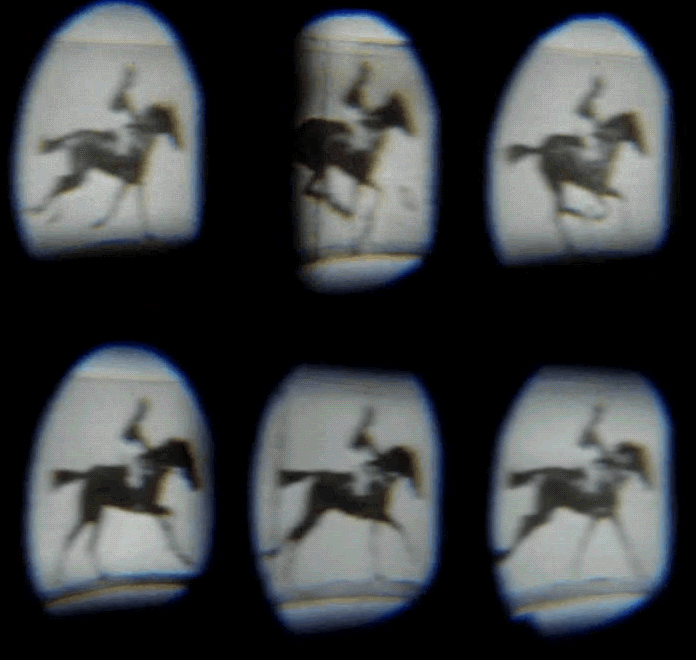
Illusion of Motion
The zoetrope became a popular, Victorian-era children’s toy in 1866, when Milton Bradley introduced the definitive version of the device with replaceable film strips. Requiring no light bulb, lens, or screen, the innovative Zoetrope convincingly converted still images into moving pictures, paving the way for motion picture technology at the turn of the next century.

The Result
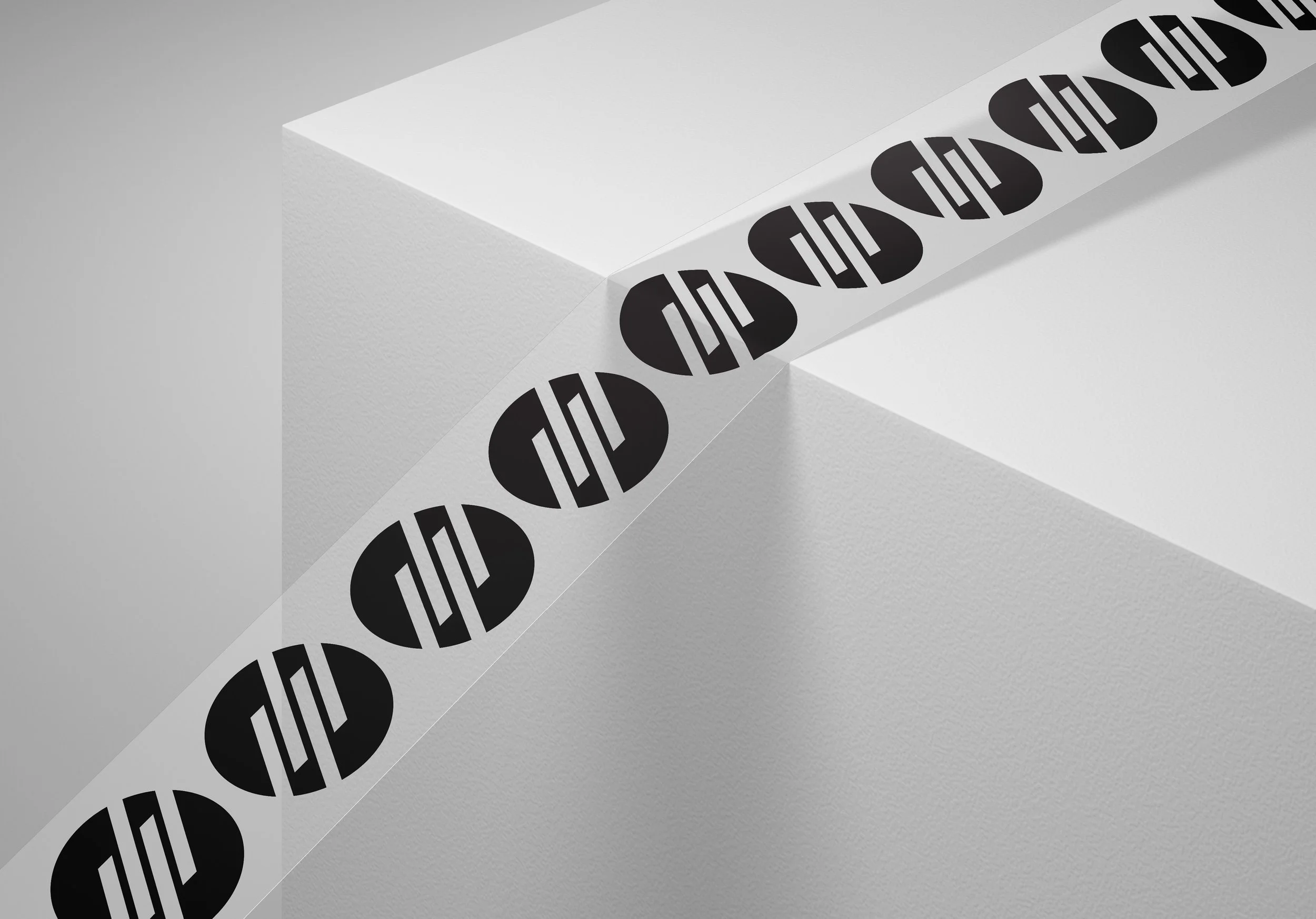
Starting with the zoetrope as inspiration, we created a new symbol for the Museum of the Moving Image. This abstract mark communicates sequential movement and foreward progress. The elegantly-simple design can work well at small or large sizes, and can be reversed out of photos. Most importantly, the museum’s distinctive new symbol is not tied to any one era or medium, and will remain timeless and appropriate for many decades to come.